What is AntiFa
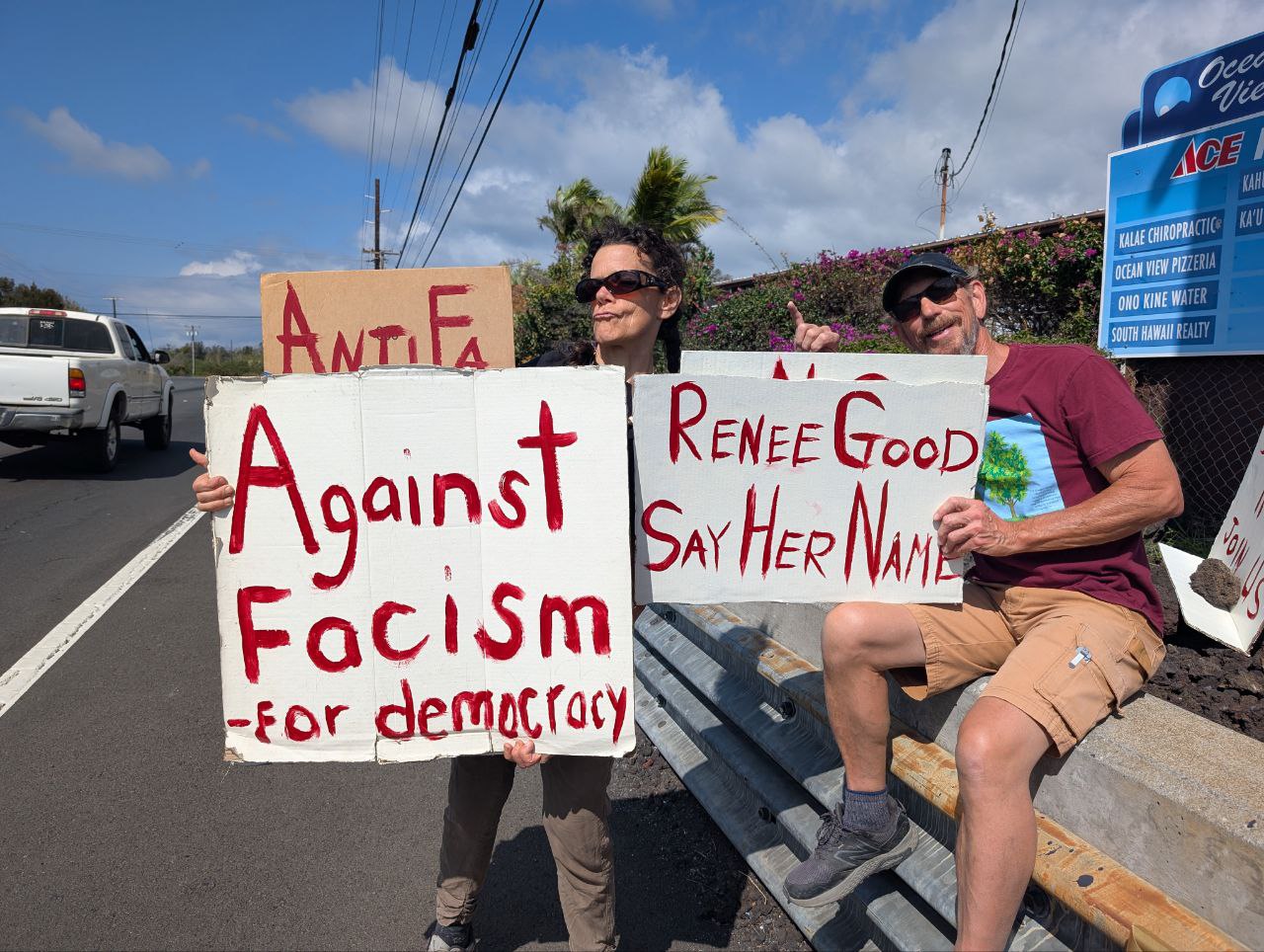
What is AntiFa
Three arguments: For AntiFa, Against AntiFa, and My view of AntiFa.
WHAT IS ANTIFA? UNDERSTANDING A MOVEMENT, NOT A MEMBERSHIP CARD
The word “Antifa” gets thrown around constantly in political headlines, but it’s frequently misunderstood — portrayed either as a sinister terrorist network or a noble band of freedom fighters, depending on who’s talking. The reality is considerably more complicated, and it starts with a simple linguistic fact: Antifa is not an organization.
Antifa, short for “anti-fascist,” is more of a decentralized movement than a unified organization. Think of it less like the Proud Boys — which has leaders, chapters, and dues — and more like the word “feminist.” You don’t join Antifa. You don’t pay dues, receive a membership card, or attend orientation. You simply identify with the idea of opposing fascism, and that identification makes you, in the loosest sense, antifa.
Former FBI Director Christopher Wray once described the notion of “antifa” as “an ideology, not an organization.” That framing is key. Unlike militant far-right groups like the Proud Boys and Oath Keepers, Antifa has never had a leader, nor is there a hierarchy or a command structure.
WHERE DID IT COME FROM?
The roots of Antifa trace back to early twentieth-century Europe, particularly the militant anti-fascist movements that arose in response to the rise of Mussolini’s Italy and Hitler’s Germany. The original Antifaschistische Aktion, founded in Germany in the early 1930s, became a symbol of left-wing resistance against Nazi and fascist forces. After the war, the spirit of those movements lived on in European punk and anarchist subcultures, eventually crossing the Atlantic. U.S. antifa activism traces its roots back to antiracists who mobilized in the 1980s while opposing the activities of racist skinheads, members of the Ku Klux Klan, and neo-Nazis.
WHAT DO ANTIFA ADHERENTS BELIEVE?
The U.S. antifa movement appears to be decentralized, consisting of independent, radical, like-minded groups and individuals. Its tenets can echo the principles of anarchism, socialism, and communism. Members may also support environmentalism, the rights of indigenous populations, and gay rights. The movement is often associated with a philosophy that prioritizes immediate action over traditional policy reform, with many members believing that it is their responsibility to disrupt hate speech and oppressive activities.
THE CONTROVERSY
People associated with Antifa typically use direct-action methods such as counter-protests, public awareness campaigns, and sometimes property disruption to oppose groups they consider authoritarian, racist, or fascist. Those tactics have been deeply polarizing. For some, Antifa represents grassroots defenders of communities against fascism, racism, and authoritarianism. For others, the movement symbolizes lawlessness, violence, and extremism on the political left.
The decentralized nature of the movement also creates real problems of definition. The term is often applied broadly to describe almost any left-leaning protester, regardless of whether they identify with the movement. This makes it easy to conflate a wide range of activism with a small subset of more militant actors.
THE BOTTOM LINE
Calling someone “Antifa” is, at its core, saying they identify as anti-fascist — a descriptor as broad and varied as calling someone “progressive” or “libertarian.” It describes a posture and a set of values, not a card-carrying membership. Understanding that distinction is essential to any honest conversation about what Antifa actually is, and what it isn’t.
ANTIFA: WHEN “JUST AN IDEA” LEAVES A TRAIL OF DAMAGE
Supporters of the Antifa movement often argue it is merely an ideology — as loose and benign as calling oneself “hungry” or “feminist.” But a closer look at the documented record raises a harder question: when an idea consistently produces violence, property destruction, and fear in communities across the country, does the label still get to hide behind abstraction?
THE “NOT AN ORGANIZATION” DEFENSE
It’s true that Antifa has no membership cards, no national headquarters, and no elected leadership. Proponents cite this to deflect accountability. But this same logic could excuse almost any pattern of collective behavior. Street gangs often lack formal organizational structures, too. The decentralized nature of Antifa does not erase the documented harm carried out by people who openly identify with the movement and act in its name.
As FBI Director Christopher Wray testified before Congress, Antifa followers “coalesce regionally into small groups or nodes and they are certainly organized at that level.” That’s not nothing. It’s a network — loosely coupled, yes, but one that shares tactics, symbols, communication channels, and a philosophy that explicitly endorses using force to silence opponents.
A DOCUMENTED RECORD OF VIOLENCE AND DESTRUCTION
The facts on the ground are not ambiguous, even if their interpretation is contested. In February 2017, 150 black-clad protesters affiliated with Antifa caused an estimated $100,000 in property damage at UC Berkeley, throwing Molotov cocktails and smashing windows to prevent a speaker from appearing on campus. In June 2019, conservative journalist Andy Ngo was attacked by Antifa-affiliated individuals in Portland, Oregon, and hospitalized. In 2019, Willem Van Spronsen, a self-described Antifa member, attempted to firebomb an ICE detention facility in Tacoma, Washington, throwing lit objects at vehicles and attempting to ignite a 500-gallon propane tank. The U.S. Attorney for the District of Oregon reported that Antifa caused more than $2.3 million in damage to federal property in Oregon alone. In 2025, federal terrorism charges were filed in connection with an armed attack on an ICE detention facility in Alvarado, Texas — the first time federal terrorism statutes were applied to Antifa-affiliated activity.
These are not rumors or right-wing talking points. They are court documents, government assessments, and news accounts from mainstream outlets.
THE PROBLEM WITH “JUST OPPOSING FASCISM”
The rhetorical brilliance of the Antifa label is that opposing it sounds like defending fascism. But that framing is a sleight of hand. The actual targets of Antifa-affiliated violence have included journalists trying to document protests, ordinary attendees at political rallies, police officers doing their jobs, and small business owners whose storefronts happened to be nearby.
Antifa literature, as documented by the Congressional Research Service, encourages followers to publicize the home addresses, phone numbers, and photos of perceived enemies — a tactic called “doxing” that has exposed private citizens, including ICE employees and their families, to threats and harassment. In 2018, more than 1,500 ICE employees were doxed by an Antifa-linked account. These are not the tools of a movement defending democracy; they are tools of intimidation.
THE ACCOUNTABILITY VACUUM
Because Antifa is decentralized, no one is ever responsible. When violence occurs, apologists note that “real” Antifa members wouldn’t do that. When property is destroyed, supporters say those individuals don’t represent the movement. The structure that makes prosecution difficult is the same structure that conveniently insulates the broader community from accountability.
This creates a one-way ratchet: the ideology claims credit for “resistance” while disavowing any individual act of harm. Communities in Portland, Seattle, and elsewhere have paid the price for years — not in abstract political debate, but in burned businesses, injured officers, and an erosion of public order that disproportionately harms the working-class neighborhoods where these confrontations take place.
THE BOTTOM LINE
Calling Antifa “just an idea” is accurate in a narrow, technical sense — and misleading in every practical one. Ideas have consequences. An idea that endorses political violence as a legitimate tool, that doxes private citizens, that has caused millions of dollars in documented damage, and that has landed people in federal court on terrorism charges deserves to be evaluated on its real-world record, not its self-flattering self-description.
Opposing actual fascism is a value most Americans share. Using that cause as cover for a pattern of unchecked violence is something else entirely.
WHY I STILL CARRY THE LABEL — AND YOU SHOULD CONSIDER IT
The previous two posts in this series laid out the facts as plainly as possible: Antifa is not an organization but an identity — something you are, not something you join. They also documented, honestly, that real harm has been done by people claiming that identity. Property destroyed. Journalists attacked. Federal officers assaulted. The record is real, and it deserves to be looked at squarely rather than explained away.
And yet I still call myself Antifa. Here’s why.
THE CHRISTIAN ANALOGY
Consider what we ask of Christians — or more precisely, what we don’t ask.
The institutional Church has an extraordinary record of harm against the most vulnerable people in its care. The sexual abuse of children by clergy, and the systematic cover-up of that abuse by Church leadership at every level, represents one of the most sustained and deliberate betrayals of trust in modern institutional history. Thousands of victims. Decades of silence. Perpetrators moved quietly from parish to parish while bishops protected the institution over the innocent.
And yet we do not ask devout, non-violent Christians to abandon the word “Christian.” We do not tell them the label is tainted beyond recovery. We understand, without much debate, that the ideal — love, justice, mercy, solidarity with the suffering — is not invalidated by the crimes committed in its name. The person living out those values quietly and honestly is not responsible for the bishop who destroyed evidence or the cardinal who looked away. The label belongs to the ideal, not to its worst practitioners.
I extend the same logic to myself.
WHAT THE LABEL ACTUALLY MEANS
Anti-fascist. That is what Antifa means. It is a compound of two words so plain that a child can parse them. To be anti-fascist is to oppose authoritarianism, to oppose the scapegoating of minorities, to oppose the concentration of power in the hands of those who would eliminate dissent. These are not fringe values. They are the values on which democratic societies were founded, and for which millions of people in the twentieth century gave their lives.
The abbreviated label has a history stretching back to resistance movements in 1930s Europe — to people who looked at what fascism actually did when it took power and decided that opposing it was worth the risk. Surrendering that history and that word because some people in Portland smashed windows would be its own kind of defeat.
THE DOUBLE STANDARD WORTH NAMING
Critics who demand that peaceful anti-fascists disavow the Antifa label rarely apply the same standard elsewhere. They do not ask non-violent Christians to rename themselves. They do not ask law-abiding gun owners to abandon the Second Amendment movement because of mass shootings carried out by people who claimed its values. They do not ask conservatives to disavow conservatism because of the violence at Charlottesville, where the marchers were not wearing black. The demand for disavowal is applied selectively, and its selectivity tells you something about its actual purpose.
That purpose is to hand the definition of the word to its opponents — to allow those most threatened by anti-fascist values to decide what the label means and who gets to use it.
ACCOUNTABILITY WITHOUT ABANDONMENT
None of this is an excuse for the documented violence. A Christian who takes their faith seriously has to reckon with the Church’s record of abuse — not explain it away, not pretend it happened elsewhere, but look at it and ask hard questions about institutions, accountability, and the gap between stated values and lived practice. That reckoning is part of what it means to take the ideal seriously.
The same is true here. Doxing private citizens is wrong. Attacking journalists is wrong. Property destruction that harms working-class communities is counterproductive and wrong. Holding those things to be true costs me nothing, because they are not what I stand for — and the movement is stronger, not weaker, for saying so plainly.
THE BOTTOM LINE
Reclaiming a label from its worst practitioners is not denial. It is insistence. It is the refusal to let harm done in the name of an ideal erase the ideal itself.
I am anti-fascist. The abbreviated form is Antifa. I carry both with open eyes and without apology — because the alternative is to leave the word to people who would hollow it out, and the values to people who would abandon them the moment they became inconvenient.
The devout Christian who stays in the pew, works for reform, and refuses to let abuse define their faith is not naive. They understand something important: that ideals are worth fighting for precisely when they are hardest to defend.
So do I.